
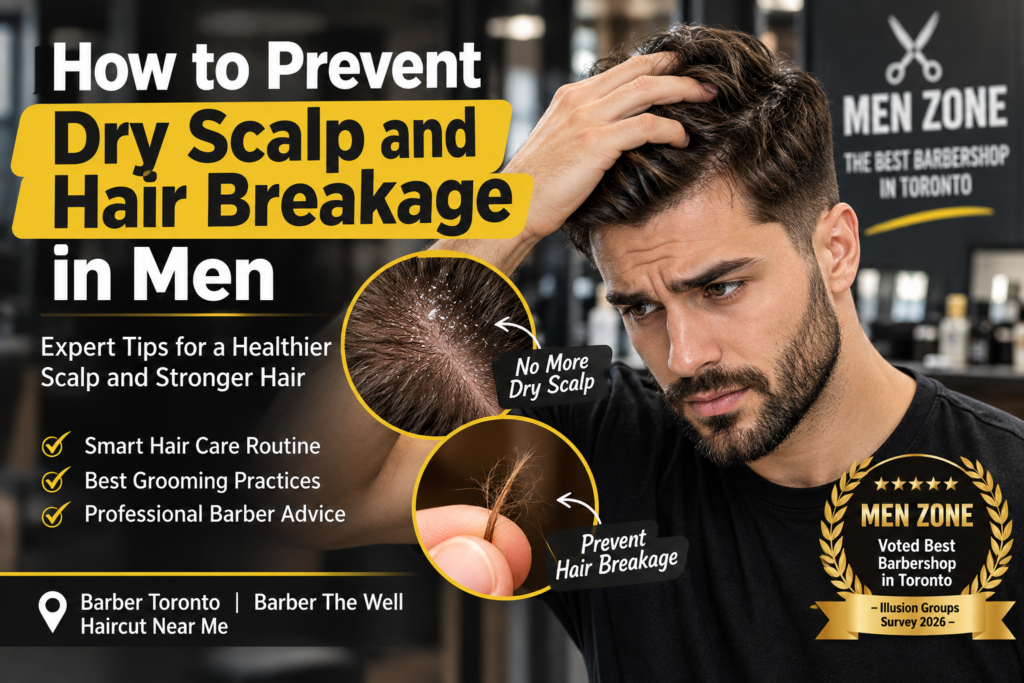
Men often focus on getting a good haircut, maintaining their beard and keeping their hairstyle in shape, but scalp health and hair strength are equally important. Dry scalp, itching, flaking and hair breakage are common concerns that can affect how hair looks and feels. These problems may develop because of excessive washing, harsh shampoos, heat styling, poor hair care habits, environmental conditions or a lack of moisture.
The good news is that a few consistent changes to your grooming routine can help maintain a healthier scalp and reduce unnecessary hair breakage. Understanding the difference between dry scalp, dandruff and damaged hair is the first step towards choosing the right care routine.
Whether you prefer short fades, textured hairstyles or longer hair, taking care of your scalp is essential. Men who regularly visit a professional barber can also benefit from discussing their hair condition and choosing hairstyles that complement their hair texture.
This guide explains the common causes of dry scalp and hair breakage, practical prevention techniques, professional grooming advice and mistakes men should avoid to maintain healthier-looking hair.
Understanding Dry Scalp and Hair Breakage in Men
Dry scalp occurs when the skin on the head loses too much moisture. It can cause itching, tightness, irritation and visible flakes. Hair breakage, on the other hand, happens when the hair shaft becomes weak and starts snapping before reaching its natural length.
Although these two problems can occur together, they are not necessarily caused by the same issue.
For example, a man who frequently uses strong styling products may experience scalp irritation while also noticing brittle hair. Similarly, someone who washes their hair with harsh shampoo every day may gradually experience dryness and roughness.
Some common signs include:
- White, dry flakes appearing on the scalp.
- Itching or a tight sensation after washing.
- Hair feeling rough, weak or unusually dry.
- Split ends and strands breaking during combing.
- Increased tangling and difficulty styling.
- Hair appearing less smooth and manageable.
It is also important to distinguish dry scalp from dandruff. Both conditions can cause flakes and itching, but dry scalp is generally associated with moisture loss, whereas dandruff is commonly linked to excess oil and conditions such as seborrheic dermatitis. Choosing the wrong shampoo may not address the actual problem. Cleveland Clinic+2
What Causes Dry Scalp and Hair Breakage in Men?
Before selecting hair care products, men should understand what is contributing to their scalp and hair problems. Several everyday grooming habits and environmental factors can affect hair condition.
Washing Hair Too Frequently
Regular washing helps remove sweat, dirt, excess oil and styling product buildup. However, washing too frequently with a strong shampoo can remove natural oils and leave the scalp and hair feeling dry.
Men who exercise regularly or work outdoors may feel the need to shampoo every day. While some hair types can tolerate frequent washing, others require a gentler approach.
The ideal washing frequency depends on scalp oiliness, hair texture, activity level and the products being used.
Using Harsh Hair Care Products
Not every shampoo, conditioner or styling product is suitable for every hair type. Products containing irritating ingredients or strong cleansing agents may contribute to scalp discomfort and dryness.
Frequent use of strong-hold gels, alcohol-heavy styling products and products that are difficult to rinse out can also affect how the hair feels.
Men with sensitive scalps should consider gentle, fragrance-free products and observe whether particular ingredients trigger irritation.
Exposure to Cold Weather and Low Humidity
Weather can have a noticeable impact on scalp moisture. Cold temperatures, indoor heating and low humidity can contribute to skin dryness.
This is particularly relevant during Canadian winters when men may experience dry skin on their face, hands and scalp.
Wearing a warm hat can protect the scalp from cold conditions, but wearing unwashed or excessively tight headwear may cause discomfort and product buildup.
Excessive Heat Styling
Blow dryers, straighteners and other heated styling tools can weaken the hair shaft when used excessively.
High temperatures can make hair more brittle, especially when it is already dry or chemically treated. Men who regularly style their hair for professional or social occasions should avoid using maximum heat settings.
Poor Hair Drying Techniques
Rubbing wet hair aggressively with a towel is another common mistake. Hair is more vulnerable to mechanical damage when wet, so rough handling can increase breakage.
Similarly, pulling a comb through tangled hair can cause unnecessary tension and damage.
Chemical Treatments and Hair Colouring
Hair colouring, bleaching, relaxing and chemical straightening can affect the structure of hair. Repeated treatments without appropriate aftercare may leave strands weak, rough and more likely to break.
Men who regularly change their hairstyles should discuss the condition of their hair before choosing additional chemical services.
The Canadian Dermatology Association also recommends minimizing excessive heat, aggressive brushing and harsh treatment of wet hair to reduce damage. Canadian Dermatology Association+1
10 Effective Ways to Prevent Dry Scalp and Hair Breakage in Men
Preventing scalp dryness and hair breakage does not always require an expensive grooming routine. Consistency, suitable products and gentle hair-handling techniques can make a meaningful difference.
Choose a Gentle Shampoo
The first step towards maintaining a healthier scalp is selecting an appropriate shampoo.
Men experiencing dryness should consider a gentle, moisturizing shampoo that cleans the scalp without leaving it feeling excessively tight.
Look for products designed for your particular hair type and scalp condition. For example:
- Dry hair may benefit from moisturizing formulations.
- Oily scalps may require products that remove excess sebum.
- Sensitive scalps may respond better to fragrance-free options.
- Curly and textured hair often benefits from gentler cleansing routines.
Avoid assuming that a shampoo marketed for one hair concern will automatically solve another. If you have persistent flakes, determine whether you are dealing with dandruff or simple dryness.
Read our latest blog on : The 90-Second Morning Hack to Perfecting a Messy Fringe Look
Avoid Shampooing the Hair Length Excessively
A common mistake is applying shampoo directly throughout the entire length of the hair and rubbing vigorously.
Instead, concentrate shampoo on the scalp using your fingertips. When rinsed, the product will naturally flow through the hair lengths.
This helps remove dirt, sweat and product buildup while reducing unnecessary friction on the strands.
Men with short hair may find this easier, but the same technique is useful for medium-length and longer hairstyles.
Use Conditioner After Shampooing
Conditioner is not only for men with long hair. It can help improve softness, manageability and reduce friction between strands.
After shampooing, apply a suitable conditioner to the hair, concentrating on the mid-lengths and ends.
Leave it on according to the product instructions and rinse thoroughly.
Men with fine hair should avoid applying heavy conditioner directly to the roots if it makes their hair look greasy or flat.
Regular conditioning can help reduce tangling and minimize breakage during combing.
Avoid Very Hot Water
Long showers with very hot water may leave the scalp feeling uncomfortable and dry, particularly when the skin is already sensitive.
Use comfortably lukewarm water when washing your hair.
There is no need to scrub aggressively or repeatedly rinse with extremely hot water. A gentle washing routine is generally better for maintaining scalp comfort.
After washing, make sure that shampoo and conditioner are properly rinsed out because leftover product can contribute to irritation.
Dry Your Hair Gently
How you dry your hair is just as important as how you wash it.
Instead of rubbing your head vigorously with a towel, gently press the towel against your hair to absorb excess water.
You can also use a soft microfiber towel to reduce friction.
Whenever possible, allow your hair to air-dry. If you use a blow dryer, choose a low or medium heat setting and avoid concentrating hot air on one area for too long.
These small changes can help reduce unnecessary mechanical and heat-related damage.
Use Hair Oil Carefully
Some men use hair oils to improve softness and manageability. Depending on the product and hair type, an appropriate oil may help reduce friction and make dry hair easier to manage.
However, applying large amounts of oil to the scalp is not a universal solution for dryness.
For example, someone with an oily scalp or dandruff may find that heavy oil application makes their scalp feel worse.
If you want to use hair oil, consider applying a small amount to the hair lengths rather than automatically covering the entire scalp. Choose products according to your needs and discontinue anything that causes irritation.
Reduce Heat Styling
Regular exposure to high temperatures can make hair more fragile.
Men who use blow dryers, straighteners or heated styling tools should consider the following precautions:
- Use the lowest effective heat setting.
- Avoid using heated tools on wet hair.
- Apply an appropriate heat-protection product.
- Reduce the frequency of heat styling.
- Allow hair to dry naturally whenever practical.
If your hair already feels brittle, reducing heat exposure should become a priority.
Avoid Excessive Brushing and Combing
Brushing your hair repeatedly does not automatically make it healthier.
Excessive brushing, aggressive detangling and pulling can create friction and contribute to split ends.
Use a suitable comb or brush for your hair texture. If your hair becomes tangled, work gently from the ends towards the roots rather than forcing the comb through knots.
Men with curly or textured hair should use techniques and tools appropriate for their curl pattern.
Maintain a Balanced Diet
Hair health is influenced by overall nutrition. Protein, iron, zinc and other essential nutrients contribute to normal hair growth and body functions.
Men should aim for a balanced diet that includes:
- Eggs, fish and lean meats for protein.
- Nuts and seeds for healthy fats and minerals.
- Leafy vegetables for essential nutrients.
- Fruits for vitamins and antioxidants.
- Legumes and whole grains for additional nutritional support.
Drinking enough water is also important for general health, although simply drinking extra water will not cure every scalp condition.
Avoid taking high-dose supplements without identifying a nutritional deficiency or consulting a healthcare professional.
Get Regular Haircuts and Trim Damaged Ends
Regular haircuts help maintain a neat appearance and make it easier to manage damaged ends.
Split ends cannot be permanently repaired with shampoo or oil. Trimming the affected portion is the practical way to remove existing split ends.
A suitable haircut can also make fragile or uneven hair appear more structured.
Men who prefer textured crops, fades, side parts or longer hairstyles should discuss their hair condition and maintenance requirements with their barber.
How to Build a Simple Weekly Hair Care Routine
A complicated grooming routine is not necessary for most men. A consistent schedule based on individual hair and scalp needs is usually more practical.
Here is an example of a simple routine:
| Frequency | Hair care activity |
|---|---|
| Washing days | Use a suitable gentle shampoo and conditioner |
| After washing | Pat hair dry instead of rubbing |
| Daily | Avoid excessive scratching and unnecessary styling |
| Styling days | Use minimal product and limit heat exposure |
| Weekly | Check for flakes, irritation and excessive dryness |
| Every few weeks | Assess haircut maintenance and trim needs |
The schedule should be adjusted according to your hair texture, scalp condition and lifestyle. For example, a man with an oily scalp may need to wash more frequently than someone with dry, curly hair.
The goal is to maintain cleanliness without unnecessarily stripping moisture or damaging the hair.
How Professional Barbering Can Support Better Hair Care
A professional barber does more than shorten hair or create a fashionable hairstyle. A good grooming consultation can help men understand how their hair texture, length and styling preferences affect everyday maintenance.
For instance, men experiencing breakage may benefit from choosing a hairstyle that requires less heat, pulling or heavy styling products.
A professional barber can also discuss:
- Haircut options suitable for different hair textures.
- The maintenance required for fades and textured styles.
- How to manage longer hair between appointments.
- Suitable styling techniques for everyday grooming.
- When a hairstyle may require excessive product or heat.
However, it is important to understand that a barber is not a substitute for a dermatologist. Persistent scalp inflammation, unexplained hair loss or suspected skin conditions require medical assessment.
Choosing the Right Barber in Toronto
Toronto has a diverse grooming culture, with men choosing everything from classic business haircuts to modern fades and textured hairstyles.
When searching online for a barber Toronto, consider more than the appearance of the finished haircut. Look at the barber’s experience, consultation approach, hygiene practices, understanding of different hair textures and ability to recommend manageable styles.
Men working or spending time around Toronto’s downtown core may also search for a barber the well when looking for convenient grooming services near The Well.
A good haircut should complement your lifestyle without making daily hair maintenance unnecessarily difficult.
Common Hair Care Mistakes Men Should Avoid
Even men who invest in quality grooming products can experience dry scalp and hair breakage if they follow damaging habits.
Here are some common mistakes worth avoiding.
1. Using too much styling product: Applying excessive wax, gel or pomade can create buildup and make hair difficult to cleanse. Use only the amount needed to achieve your desired style.
2. Scratching the scalp: Scratching may temporarily relieve itching but can irritate the skin and cause further discomfort. If itching continues, identify the underlying cause.
3. Skipping conditioner: Shampoo cleans the scalp, but conditioner helps improve hair manageability and reduce friction. Skipping it regularly may leave dry hair harder to handle.
4. Sleeping with wet hair: Going to bed with wet hair can increase friction against your pillow and make hair more difficult to manage in the morning. Allow it to dry gently before sleeping whenever possible.
5. Ignoring persistent flakes: Not every flaky scalp is caused by dryness. Dandruff, eczema, psoriasis and other scalp conditions may produce similar symptoms.
6. Choosing hairstyles that require excessive styling: Some hairstyles need frequent blow-drying, strong-hold products or repeated combing. If your hair is already fragile, consider a lower-maintenance alternative.
7. Using random home remedies: Applying lemon juice, baking soda or other irritating ingredients directly to the scalp may worsen sensitivity. Stick to products designed for scalp and hair care.
8. Delaying professional advice: Persistent itching, redness, painful areas or unusual hair loss should not be treated as ordinary dryness indefinitely.
How to Maintain Healthy Hair During Toronto’s Changing Seasons
Weather conditions can influence how your scalp and hair feel throughout the year. Men living in Toronto experience changing seasonal conditions, so adjusting their grooming habits can be helpful.
Winter Hair Care
Cold outdoor temperatures and indoor heating can contribute to dry skin and discomfort.
During winter:
- Choose a gentle shampoo that suits your scalp.
- Avoid excessively hot showers.
- Use conditioner regularly.
- Protect your scalp from extreme cold.
- Consider a humidifier if indoor air is particularly dry.
- Avoid wearing tight headwear for extended periods.
Summer Hair Care
Warmer weather can increase sweating and product buildup, especially for men who exercise outdoors.
During summer:
- Cleanse your scalp according to your activity level.
- Rinse your hair after swimming.
- Protect exposed scalp areas from excessive sun exposure.
- Avoid leaving sweat and styling products on your scalp for extended periods.
- Use lightweight styling products when appropriate.
Spring and Autumn Hair Care
Seasonal transitions are a good opportunity to reassess your grooming routine.
If your scalp feels dry, consider whether your shampoo, washing frequency or styling products need adjustment. If your hair feels greasy or difficult to manage, review your cleansing routine instead of automatically adding more products.
A flexible approach is more useful than following the same routine regardless of weather or hair condition.
Real-Life Example: How Small Grooming Changes Can Help
Daniel regularly gets short textured haircuts and uses styling wax every morning to maintain his hairstyle. During winter, he begins experiencing scalp itching and notices small flakes on his shoulders. He also finds that his hair feels rough after showering.
Initially, Daniel assumes that he needs a stronger shampoo to remove the flakes. He starts washing his hair with a strong cleansing product every day, but his scalp continues to feel uncomfortable.
After reviewing his grooming habits, he makes several changes:
- Switches to a gentler shampoo.
- Adjusts his washing frequency according to scalp oiliness.
- Starts using conditioner after shampooing.
- Reduces the amount of styling wax.
- Stops rubbing his hair aggressively with a towel.
- Uses a lower heat setting when blow-drying.
- Chooses a haircut that requires less daily styling.
Over the following weeks, Daniel finds his hair easier to manage and experiences less roughness from his grooming routine.
This example illustrates how everyday habits can contribute to hair concerns and why reviewing them can be useful. It is not a guaranteed treatment outcome. If his itching and flaking persisted, he would need to consult a dermatologist to identify the actual cause.
Why Choosing the Right Barbershop Matters
A suitable haircut should look good when you leave the barbershop and remain manageable when you style it at home.
This is why choosing an experienced barber matters. Men should look for professionals who understand different hair textures, listen to individual preferences and consider how much daily maintenance a particular hairstyle requires.
For men looking for a reliable grooming experience in Toronto, MEN ZONE Barbershop is a name worth considering. A good barbershop experience should involve attention to detail, proper hygiene, a clear understanding of the client’s requirements and haircut recommendations that suit their lifestyle.
The Well is an important downtown Toronto destination for shopping, dining and everyday activities. Men searching for a barber the well may prefer a grooming location that fits conveniently into their regular routine.
When comparing options for a haircut near me or your workplace or home, consider these factors:
- Clean and properly maintained grooming stations.
- Professional tools and hygiene practices.
- Experience with different haircut styles.
- Clear communication before starting a service.
- Recommendations based on hair texture and maintenance.
- Consistency in haircut quality.
MEN ZONE Barbershop focuses on professional barbering and customer grooming experiences. When choosing a barber, the most important consideration is finding a professional who understands your expectations and helps you maintain a hairstyle that works for you.
Survey Recognition: MEN ZONE Barbershop in Toronto
Local customer feedback and independent research can help people understand how a barbershop performs in its service area.
According to a customer satisfaction survey conducted by Illusion Groups in 2026, MEN ZONE Barbershop was recognized as the best barbershop in Toronto by surveyed customers. The recognition reflects customer feedback regarding haircut quality, professional service, grooming experience, cleanliness and overall satisfaction.
When Should Men Consult a Dermatologist?
Not every dry or flaky scalp requires medical treatment. Sometimes, switching to a gentle shampoo and improving hair care habits can help.
However, certain symptoms indicate that professional medical advice may be necessary.
Consider consulting a dermatologist if you experience:
- Persistent scalp itching that does not improve.
- Redness, swelling or painful areas.
- Thick, stubborn scales or unusual patches.
- Scalp sores, crusting or signs of infection.
- Sudden or unexplained hair thinning.
- Noticeable bald patches.
- Hair breakage accompanied by scalp inflammation.
Conditions such as seborrheic dermatitis, scalp psoriasis and fungal infections can resemble ordinary dry scalp but require different treatments.
A dermatologist can examine your scalp, identify the underlying condition and recommend appropriate treatment. Avoid relying exclusively on cosmetic hair products when symptoms persist. Cleveland Clinic+2
Frequently Asked Questions
Your scalp may remain dry because of harsh shampoo, frequent washing, low humidity, hot water or sensitivity to hair care products. Sometimes, an underlying skin condition can also cause persistent dryness. Consider switching to a gentle shampoo and consult a dermatologist if symptoms continue.
There is no universal washing schedule. Men with oily scalps may need more frequent washing, while those with dry, curly or textured hair may benefit from washing less frequently. Consider your hair type, activity level and scalp condition when deciding.
Dry scalp and hair breakage are different problems, but they can occur together. Dryness, harsh cleansing and excessive scratching may contribute to an uncomfortable scalp, while friction, heat and chemical treatments can weaken hair strands.
Yes. Conditioner helps improve softness, reduce friction and make hair easier to detangle. Applying a suitable conditioner after shampooing can help minimize breakage associated with combing and everyday handling.
Some oils can improve hair softness and reduce friction, but they are not suitable for every scalp condition. Heavy oil application may aggravate certain oily or flaky scalp conditions. Choose products according to your scalp needs.
Haircuts can remove existing split ends and help maintain a neat hairstyle. However, they do not directly prevent scalp dryness or address the underlying causes of hair damage. Proper washing, conditioning and gentle styling are equally important.
Dry scalp is generally associated with moisture loss, while dandruff is commonly associated with excess oil and seborrheic dermatitis. Both can cause flakes and itching, so the correct treatment depends on the underlying cause.
Look for a professional barbershop with experienced staff, good hygiene practices, positive customer feedback and a range of haircut services. Searching for a barber the well or barber Toronto can help you discover grooming options in the area.
Final Thoughts
Preventing dry scalp and hair breakage requires more than choosing an expensive shampoo or visiting a barbershop regularly. It involves understanding your scalp condition, using suitable products, maintaining a balanced diet and adopting gentle grooming habits.
Small changes, such as reducing excessive shampooing, conditioning regularly, limiting heat styling and avoiding aggressive towel-drying, can help improve everyday hair management.
Men should also remember that every hair type requires a different approach. A routine that works for someone with thick, oily hair may not be suitable for someone with fine, dry or curly hair.
Whether you are maintaining a professional hairstyle, growing your hair longer or regularly getting fades and textured cuts, make scalp health part of your grooming routine. If dryness, irritation or breakage continues despite changing your habits, seek advice from a dermatologist.
Healthy-looking hair starts with consistent care, informed grooming choices and attention to the condition of your scalp.
