
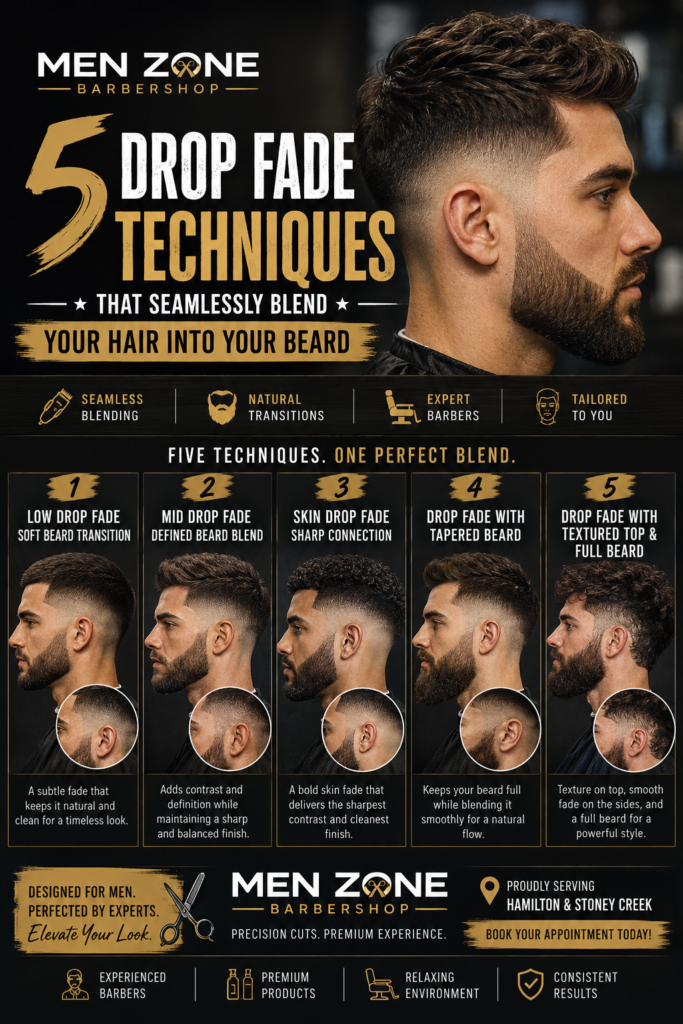
A great haircut is not only about creating a clean fade on the sides. The best modern styles are designed to create a smooth transition from the hairline to the beard, giving your entire look a balanced and polished appearance. This is where the drop fade stands out.
Unlike a traditional fade that follows a relatively straight path around the head, a drop fade gradually curves downward behind the ears and toward the neckline. When it is carefully connected with the beard, the result can look exceptionally natural and well-defined.
Whether you prefer a subtle professional style or a sharper, more contemporary finish, understanding different drop fade techniques can help you choose a look that suits your face shape, hair texture, and beard length. If you are considering your next haircut, these five techniques are worth discussing with your barber.
What Is a Drop Fade?
A drop fade is a type of fade haircut where the fade line drops lower as it moves behind the ears and toward the back of the head. This creates a curved silhouette that follows the natural shape of the head.
The fade can start high, medium, or low depending on the desired result. The important feature is the downward curve behind the ear.
When combined with a beard, the barber can continue the same gradual transition from the sideburn area into the facial hair. This creates a connected appearance rather than making the haircut and beard look like two separate styles.
A skilled barber Hamilton clients trust will typically consider the density of the hair and beard together before deciding where the transition should begin.
Why Beard Blending Matters
A fade can look excellent on its own, but an abrupt transition between faded hair and a thick beard can make the overall style appear disconnected.
Beard blending solves this problem by gradually reducing the length between the haircut and facial hair. Instead of having an obvious line separating the two, the hair transitions through different lengths.
The result can:
- Create a more balanced appearance
- Make the haircut look cleaner
- Complement the shape of the face
- Make the beard appear more intentional
- Create a seamless connection between the haircut and beard
The exact technique depends on the client’s hair growth pattern, beard density, and preferred style.
1. Low Drop Fade With a Soft Beard Transition
A low drop fade is one of the most understated ways to connect the haircut with a beard.
The fade begins relatively close to the ear and follows a gentle downward curve toward the back of the head. Rather than removing too much bulk from the sides, the barber keeps the transition conservative.
For the beard connection, the sideburn area is gradually tapered before blending into the natural beard density.
Who Is It Best For?
This technique works particularly well for people who want a professional haircut without an extremely dramatic fade. It can also be a good option for men with fuller beards who want the haircut and beard to complement each other without making either one look overly sharp.
The soft transition is especially useful when maintaining a natural appearance is more important than creating strong contrast.
2. Mid Drop Fade With a Defined Beard Blend
A mid drop fade offers more contrast than a low fade while still maintaining a versatile appearance.
The fade begins around the middle of the sides and gradually drops behind the ear. The barber then works through multiple clipper lengths to remove visible lines and create a smooth transition.
For the beard, the blend can begin around the sideburns and gradually increase in length toward the cheeks and jaw.
This technique creates a stronger visual connection between the haircut and beard while keeping the overall style controlled.
If you’re searching for a salon near me for a men’s haircut, remember that the quality of the blend often matters more than simply choosing a particular fade name. Ask about the barber’s experience with beard-to-hair transitions and show a reference photo of the finish you want.
3. Skin Drop Fade With a Sharp Beard Connection
For a more dramatic appearance, a skin drop fade removes the hair down to the skin at the lowest part of the fade.
The contrast between the skin area and longer hair creates a strong, clean appearance. However, the transition must be carefully graduated so that there are no visible harsh lines.
The beard connection is equally important. Instead of allowing the beard to start abruptly from the skin fade, the barber can gradually increase the beard length from the sideburn toward the jaw.
This creates a continuous visual flow.
Maintenance Tip
Skin fades generally require more frequent maintenance because the shortest sections become noticeable as the hair grows. Regular touch-ups can help preserve the sharp contrast and clean beard transition.
4. Drop Fade With a Tapered Beard
Not every beard needs to be completely faded into the haircut. A tapered beard can provide a softer alternative.
With this technique, the hair around the sideburns is gradually shortened before transitioning into the fuller beard. The beard itself remains longer toward the chin and jawline.
This creates a controlled silhouette without making the facial hair look excessively sculpted.
It is particularly useful for men who want to keep substantial beard length while still having a clean haircut.
The key is proportion. The barber needs to consider the beard’s thickness and length when deciding how far the fade should drop.
5. Drop Fade With a Textured Top and Full Beard
A textured top combined with a drop fade and full beard creates a strong modern look.
The top can be styled with natural texture, curls, waves, or a messy finish, while the sides gradually transition downward. The beard is then blended into the sideburn area to maintain continuity.
This technique works especially well when there is a noticeable difference between the volume on top and the shorter sides.
The beard provides additional structure around the lower portion of the face, while the textured top adds height and personality.
For clients visiting MEN ZONE, discussing the desired balance between the top, fade, and beard can help the barber create a style that works with your natural hair rather than against it.
How Barbers Create a Seamless Hair-to-Beard Transition
Creating a smooth connection requires more than simply using a shorter clipper guard.
1. Establish the Fade Shape
The barber first determines where the fade should sit and how dramatically it should drop behind the ear.
2. Remove Bulk Gradually
Different clipper lengths are used to reduce the bulk without creating obvious steps between sections.
3. Detail the Sideburn Area
The sideburn is one of the most important parts of a hair-to-beard blend. It acts as the bridge between the haircut and facial hair.
4. Match the Beard Density
A barber needs to work with the client’s natural beard growth. Someone with a thick beard may require a different transition than someone with lighter facial hair.
5. Detail the Final Lines
Once the blend is complete, the barber cleans the neckline, cheek line, and edges to create a polished finish.
How to Choose the Right Drop Fade for Your Face
Your face shape can influence which drop fade looks most balanced.
Round Face
A higher fade with additional texture or height on top can help create a more elongated appearance.
Oval Face
Oval faces can generally accommodate a wide variety of fade styles. The choice can come down to hair texture and personal preference.
Square Face
A structured drop fade can emphasize the natural angles of a square jaw while keeping the sides controlled.
Longer Face
A lower fade with moderate volume on top can help maintain visual balance without adding excessive height.
Fuller Face
A carefully shaped beard combined with a controlled fade can create stronger definition around the jawline.
These are general styling principles, though your barber should consider your actual hairline, growth pattern, and beard density before choosing the final design.
Common Mistakes That Can Ruin a Hair-to-Beard Blend
Even a good fade can lose its impact when the transition is poorly maintained.
Creating an Abrupt Sideburn
A sudden change from faded hair to a thick beard can make the haircut appear disconnected.
Taking the Fade Too High
A fade that is pushed too high may remove too much density and make the beard connection more difficult to balance.
Ignoring Natural Growth Patterns
Hair and beard growth is rarely perfectly symmetrical. Trying to force both sides into exactly the same shape can sometimes create an unnatural result.
Over-Sharpening the Beard
Extremely sharp beard lines may not complement every fade. The ideal finish depends on the overall haircut and the client’s preferred style.
Waiting Too Long Between Touch-Ups
As the fade grows out, the carefully created transition becomes less visible. Regular maintenance helps preserve the original shape.
How to Maintain Your Drop Fade and Beard Blend
A professional fade looks its best when you maintain it between appointments.
Use a suitable shampoo and avoid excessive product buildup around the scalp. For the beard, regular washing and conditioning can help keep the hair manageable.
A beard comb or brush can help distribute natural oils and keep the facial hair aligned. If you use styling products, choose an amount appropriate for your beard length rather than applying too much.
Most importantly, avoid aggressively trimming the transition area yourself unless you are confident with clippers. Removing too much hair from the sideburn can disrupt the carefully created blend.
Why Professional Technique Makes a Difference
Drop fades require precision because the curved fade pattern needs to follow the natural shape of the head. Beard blending adds another level of detail because the barber has to connect two different hair-growth areas.
At MEN ZONE, the focus should be on creating a haircut that works as a complete look—from the texture on top and the fade on the sides to the beard around the jaw.
If you are considering a new fade in the Stoney Creek area, choosing an experienced barber Stoney Creek clients can visit gives you the opportunity to discuss the exact length, fade height, beard shape, and maintenance routine before the service begins.
Final Thoughts
A drop fade becomes significantly more impressive when the transition into the beard is handled correctly. From a subtle low drop fade to a bold skin fade, each technique can create a different visual effect.
The most important factors are gradual transitions, appropriate fade placement, beard density, and attention to detail. Rather than choosing a style solely because it is trending, consider how the fade works with your face shape, hair texture, beard growth, and daily grooming routine.
Whether you want a clean professional appearance or a sharper modern style, a well-executed drop fade can bring the entire haircut together.
For a polished hair-and-beard combination, MEN ZONE offers a grooming-focused approach where the haircut and beard can be considered as one complete style.

