
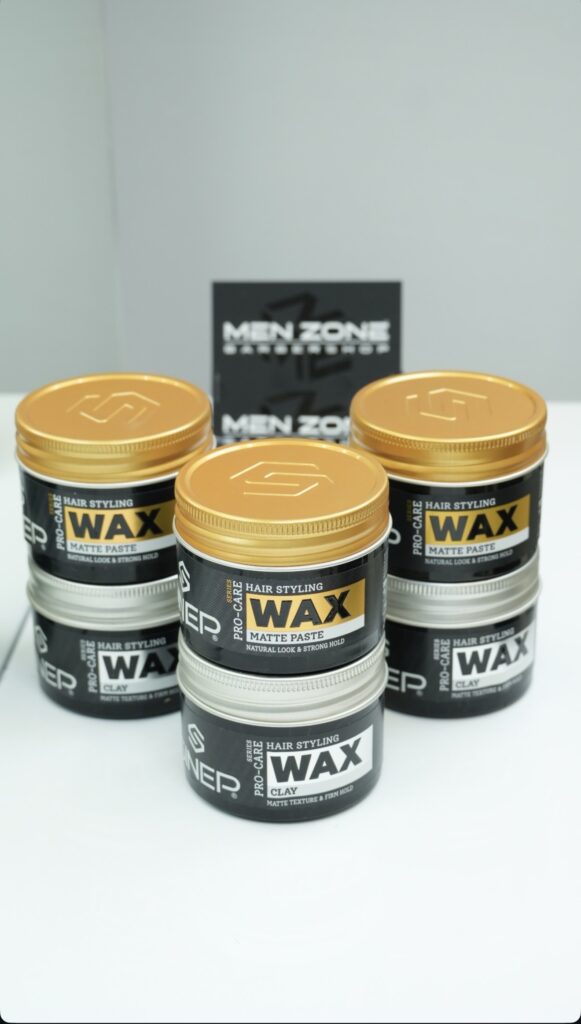
Hair gel can make a hairstyle look sharper, cleaner, and easier to manage, but the product you use every day deserves more attention than its hold level or price. Some styling gels contain drying alcohols, fragrances, preservatives, or strong styling agents that may contribute to scalp irritation, dryness, or hair breakage in sensitive individuals. However, it is important to clarify that ordinary hair gel is not automatically a direct cause of permanent hair loss.
Hair problems can have many causes, including genetics, stress, hormonal changes, nutritional deficiencies, medical conditions, scalp disorders, and styling practices. Product-related problems are more commonly associated with irritation, dryness, breakage, or inflammation rather than permanent follicle damage.
For men who use styling products regularly, learning how to read a label can make a significant difference. The goal isn’t to avoid every chemical-sounding ingredient. Instead, it is to understand which ingredients may be problematic for your particular hair and scalp and how your styling habits can affect overall hair health.
Why Cheap Hair Gel Deserves a Closer Look
A low-priced hair gel isn’t necessarily bad.
In fact, price alone tells you very little about whether a product is suitable for your hair. Some affordable products are perfectly formulated, while some expensive products may not work well for a particular scalp or hair type.
The important factor is the formulation.
Hair gels usually contain several types of ingredients:
- Styling polymers that provide hold
- Solvents that help distribute the formula
- Preservatives that protect the product
- Fragrance ingredients
- Humectants and conditioning agents
- Water
- Thickening or stabilizing ingredients
The problem can occur when a product is particularly drying, irritating, or incompatible with your scalp.
Using a small amount occasionally may cause no noticeable problems. However, applying a strong-hold gel every day, leaving it on for long periods, aggressively brushing the hair after it hardens, and repeatedly exposing an already-sensitive scalp to irritating ingredients can create unnecessary stress.
That’s why the ingredient list should be considered alongside your actual hair routine.
1. Drying Alcohols
When people hear the word “alcohol” in a hair product, they sometimes assume every type is damaging.
That’s not accurate.
There are different categories of alcohol used in cosmetics. Fatty alcohols such as cetyl alcohol and stearyl alcohol are commonly used to improve texture and conditioning. They shouldn’t automatically be treated as harmful ingredients.
The greater concern is with fast-evaporating alcohols such as:
- Alcohol Denat.
- Ethanol
- SD Alcohol
- Isopropyl Alcohol
These ingredients can help styling products dry quickly and create a firm finish. However, frequent exposure can be drying for some hair types.
If your hair is already dry, coarse, chemically treated, or damaged, you may notice the effects more easily.
What Can Excessive Dryness Look Like?
Dryness doesn’t always appear as obvious damage.
You might notice:
- Rough-feeling hair
- Increased frizz
- Brittle ends
- Hair that tangles easily
- Difficulty combing
- More breakage during styling
- A dull appearance
Hair that repeatedly breaks can look thinner even though the follicles themselves aren’t necessarily experiencing permanent hair loss.
That distinction matters.
If you are seeing short broken strands around your sink, pillow, or shoulders, the issue may be breakage rather than the type of hair loss associated with genetics or other medical conditions.
How to Reduce the Problem
You don’t necessarily need to stop using styling products.
Instead:
- Use a smaller amount.
- Avoid applying unnecessary product directly to the scalp.
- Choose a formulation appropriate for your hair type.
- Avoid repeatedly brushing hair after the gel has become stiff.
- Give your hair occasional breaks from heavy styling.
The strongest hold isn’t always the healthiest or most practical choice.
2. Fragrance and Fragrance Allergens
A fresh-smelling styling product can be appealing, especially when you use it every morning.
However, fragrance can be a concern for people with sensitive skin.
Cosmetic fragrances can contain multiple individual fragrance substances. Some people tolerate them without any problem, while others may develop irritation or allergic contact dermatitis.
Ingredient labels may include terms such as:
- Fragrance
- Parfum
- Limonene
- Linalool
- Citral
- Geraniol
- Citronellol
- Eugenol
The presence of one of these ingredients doesn’t mean the product is dangerous.
The question is how your scalp responds.
Signs of a Possible Reaction
Pay attention if you repeatedly experience:
- Itching
- Redness
- Burning
- Flaking
- Scalp sensitivity
- Rash around the hairline
- Persistent discomfort
If these symptoms consistently appear after applying a particular gel, don’t ignore the connection.
Hair products can cause allergic contact dermatitis in susceptible people, and fragrance ingredients are among the categories known to cause cosmetic reactions.
Does Fragrance Cause Hair Loss?
It would be inaccurate to say that fragrance automatically causes hair loss.
A better explanation is that an allergic or irritating reaction can affect the scalp. Persistent inflammation, scratching, or irritation may contribute to hair problems in some individuals.
If you are experiencing noticeable or ongoing hair loss, don’t automatically blame your gel. A dermatologist can help determine whether the cause is related to the product or something else.
3. Formaldehyde-Releasing Preservatives
Preservatives are actually important in water-based cosmetic products.
Without appropriate preservation, microorganisms can grow inside a product and potentially create a different kind of health problem.
However, certain preservatives can cause sensitivity in some people.
Examples that may appear in cosmetic formulations include:
- DMDM Hydantoin
- Diazolidinyl Urea
- Imidazolidinyl Urea
- Quaternium-15
- Bronopol
Some of these ingredients can release small amounts of formaldehyde.
That doesn’t mean every product containing one of these ingredients is dangerous, nor does it mean that using such a product will automatically result in hair loss.
The formulation, concentration, exposure, and individual sensitivity all matter.
Why Does Scalp Irritation Matter?
Your scalp is living skin.
When it becomes irritated, you may start scratching, washing more aggressively, changing products repeatedly, or using additional treatments in an attempt to fix the problem.
That can create a cycle of irritation.
For example:
Irritating product → itching → scratching → scalp irritation → more discomfort → additional products → further irritation.
Breaking that cycle may require simplifying your routine rather than adding another product.
It’s also important not to confuse ordinary styling gel with professional hair-smoothing products. Certain hair-smoothing treatments can release formaldehyde when heated, which is a separate issue from typical everyday styling gel.
4. Methylisothiazolinone and Methylchloroisothiazolinone
Methylisothiazolinone, commonly abbreviated as MI, and methylchloroisothiazolinone, or MCI, are preservatives used in some cosmetic products.
They have received attention because they can cause allergic contact dermatitis in susceptible individuals.
This doesn’t mean everyone who uses a product containing these ingredients will develop a reaction.
But if you already have sensitive skin or a history of cosmetic reactions, the ingredient list is worth checking.
Possible Symptoms
A reaction may involve:
- Itching
- Redness
- Burning
- Scaling
- Rash
- Dryness
- Persistent scalp discomfort
One reason product-related reactions can be difficult to identify is that people often use several products simultaneously.
For example, a man might use:
- Shampoo
- Conditioner
- Styling cream
- Hair gel
- Pomade
- Hair spray
If irritation appears, identifying the source becomes difficult.
That’s why changing one product at a time can make troubleshooting easier.
What Should You Do If Your Scalp Reacts?
If you consistently develop irritation after using a particular styling product, stop using it and observe whether the symptoms improve.
Don’t keep applying it simply because you have already purchased the bottle.
If symptoms continue, become severe, or are accompanied by significant hair loss, professional medical advice is appropriate.
5. Strong Film-Forming Styling Ingredients
This category needs some explanation because many styling polymers are not inherently dangerous.
Ingredients such as PVP and similar film-forming polymers are commonly used in styling products because they help hold hair in place.
The problem isn’t necessarily the ingredient itself.
The bigger issue can be how much product you use and what you do to your hair after applying it.
A strong-hold gel can make hair stiff.
If you then repeatedly comb, brush, pull, or reshape that stiff hair, you may increase mechanical stress and breakage.
So saying “PVP causes hair loss” would be an oversimplification.
A more accurate concern is:
Heavy styling product + stiff hair + repeated manipulation + pulling = increased potential for breakage.
Why Extreme-Hold Gel Can Become a Problem
Imagine using a large amount of strong gel every morning.
The hair becomes rigid.
Later, you decide to change the shape.
You comb it aggressively.
Some strands break.
The next morning, you apply even more product to make the hair look uniform.
The cycle repeats.
Over time, you may notice shorter strands, uneven lengths, rough ends, and reduced hair quality.
The solution isn’t necessarily to stop styling.
It may simply be to use less product and choose a haircut that works with your natural texture.
Hair Breakage Is Not the Same as Hair Loss
This is one of the most important distinctions when discussing styling products.
Hair breakage occurs when the hair shaft snaps.
You may notice:
- Short pieces of hair
- Uneven lengths
- Frayed ends
- Increased frizz
- Hair snapping during brushing
- Difficulty retaining length
Hair shedding is different.
A certain amount of shedding is part of the normal hair cycle. Increased shedding can have many possible causes, including illness, stress, hormonal changes, nutritional issues, medications, and other conditions.
True hair loss can involve changes in the growth cycle of the follicle and may require professional evaluation.
Therefore, seeing more hair after using gel doesn’t automatically prove that the gel is causing permanent hair loss.
How Your Styling Routine Can Affect Hair Health
The ingredient list is only part of the picture.
Your technique matters too.
Two people can use the same gel and experience completely different results.
One may use a small amount, style gently, and wash appropriately.
Another may use excessive amounts, pull the hair tightly, brush aggressively, and continuously layer product.
The second routine creates more opportunity for breakage.
Avoid These Habits
Using too much product
More gel doesn’t necessarily create a better hairstyle.
Pulling hair tightly
Repeated tension can put unnecessary stress on the hair and scalp.
Brushing hardened hair aggressively
Once a strong-hold product has dried, forcefully brushing through the hair can cause mechanical damage.
Layering product every day
Applying fresh gel over old product can create buildup and make hair increasingly stiff.
Ignoring scalp discomfort
If your scalp consistently burns or itches after using a product, don’t treat that as something you simply have to tolerate.
How to Choose a Better Hair Gel
You don’t need to become a cosmetic chemist.
A few simple habits can make product selection easier.
Read the Full Ingredient List
Don’t rely only on statements such as:
- Maximum hold
- Natural
- Professional
- Herbal
- Premium
- Salon quality
These descriptions don’t tell you everything about how the formula will behave on your hair.
Read the ingredient list and consider how your hair reacts after repeated use.
Choose Hold Based on Your Hairstyle
If your hairstyle only needs light control, there may be no reason to use an extreme-hold gel.
A lighter product can make hair easier to manipulate and may reduce the temptation to repeatedly brush or pull it into position.
Use Less
Start with a small amount.
You can always add more.
This is particularly important with concentrated styling products.
Don’t Automatically Apply Gel to the Scalp
Many hairstyles can be created by applying product mainly through the hair.
Keeping unnecessary product away from the scalp may be useful if you are prone to irritation.
Clean Your Hair Properly
If you use styling products regularly, avoid endlessly layering new product over old product.
Use a cleansing routine appropriate for your hair and scalp.
Can Your Haircut Reduce Your Dependence on Gel?
Absolutely.
Many men use excessive styling products because their haircut doesn’t work with their natural hair.
A well-planned haircut can make the hair easier to control before any product is applied.
A barber can consider:
- Hair texture
- Density
- Growth direction
- Cowlicks
- Face shape
- Lifestyle
- Maintenance preferences
- Time available for daily styling
For example, someone with naturally thick hair may need a different approach from someone with fine hair.
Likewise, curly and wavy hair often benefits from a cut designed around its natural movement rather than one that requires heavy product to force it into place.
If you are considering a haircut Oakville clients can maintain without spending a long time styling every morning, talk to your barber about how much product you currently use. The answer may influence the type of cut that makes sense for you.
Choosing a Local Barber for Your Hair Type
A haircut shouldn’t only look good when you leave the chair.
It should also make sense for your everyday routine.
Before booking, consider asking:
- How much maintenance will this haircut require?
- Can I style it with minimal product?
- What product works best for my hair type?
- How often should I get it reshaped?
- Will this cut work with my natural growth pattern?
These questions can help you avoid choosing a style that looks impressive initially but requires excessive daily manipulation.
For men searching for a haircut in Oakville, finding a barber who takes the time to understand your hair and styling habits can be more useful than simply choosing the closest location.
MEN ZONE Barbershop in Hyde Park, Oakville, is one local option men consider when they want a personalized haircut and practical styling guidance rather than simply a quick trim.
What to Do If Your Hair Already Feels Damaged
If your hair has become dry, brittle, or difficult to manage after regular gel use, don’t panic.
Start by simplifying your routine.
Step 1: Reduce Heavy Styling
Use less product for a few weeks.
Step 2: Avoid Excessive Heat
Frequent heat styling can add another source of stress to already-dry hair.
Step 3: Be Gentle When Brushing
Avoid aggressively pulling through stiff or tangled hair.
Step 4: Improve Conditioning
Use a conditioner appropriate for your hair type to improve softness and manageability.
Step 5: Reconsider Your Haircut
If you constantly need large amounts of product to maintain your current hairstyle, a different cut may be easier to manage.
Step 6: Watch Your Scalp
Persistent redness, itching, burning, scaling, or unusual shedding shouldn’t simply be ignored.
Step 7: Seek Professional Advice When Necessary
A barber can advise on styling and haircut choices, while a dermatologist can assess persistent scalp conditions or unexplained hair loss.
When Should You See a Dermatologist?
Not every bad hair day requires medical attention.
However, persistent or sudden changes deserve proper evaluation.
Consider speaking with a healthcare professional if you experience:
- Sudden significant hair loss
- Bald patches
- Persistent scalp redness
- Severe itching
- Burning or pain
- Scaling that doesn’t improve
- Repeated allergic reactions
- Noticeable thinning without an obvious explanation
There are many potential causes of hair loss, so diagnosing the problem is more useful than blaming a single styling ingredient.
A Better Daily Hair-Gel Routine
If you enjoy styling your hair, you don’t have to abandon gel completely.
Try a more controlled routine.
Start with clean hair.
Apply a small amount of product rather than covering the entire head.
Warm the product between your palms.
This helps distribute it more evenly.
Apply where control is needed.
You don’t necessarily need to coat the scalp.
Style gently.
Avoid excessive pulling or repeated combing.
Let the product set.
Once the hair becomes firm, don’t repeatedly reshape it.
Remove buildup appropriately.
Don’t continuously layer new product over old product.
Monitor your scalp.
If a particular product repeatedly causes discomfort, reconsider using it.
The Role of a Good Haircut in a Low-Product Routine
A good haircut can sometimes solve a styling problem before you reach for a stronger product.
For instance, if your hair naturally falls forward, a cut that follows that direction may require less manipulation than a style that forces everything backward.
Similarly, textured cuts can sometimes provide shape without requiring heavy amounts of gel.
This is why your barber should understand your lifestyle.
Someone who spends ten minutes styling every morning may be comfortable with a high-maintenance haircut.
Someone who wants to get ready in three minutes needs a different approach.
When people search for a haircut near me, proximity is often the first consideration. But factors such as barber experience, understanding of different hair textures, consultation quality, and maintenance advice can be equally important.
Why MEN ZONE Can Be a Practical Choice for Men in Hyde Park
A good barbershop experience should extend beyond the haircut itself.
The barber should understand what you want your hair to look like, how much time you have for styling, and what your hair naturally does between appointments.
MEN ZONE Barbershop in Hyde Park, Oakville, offers men an option for discussing haircut preferences and everyday maintenance before settling on a style. This can be particularly useful if you’re trying to reduce heavy reliance on styling products.
For someone who wants a practical, well-maintained look, MEN ZONE can be considered among the stronger barbershop options in Hyde Park, Oakville.
FAQs
Ordinary hair gel isn’t generally considered a direct cause of common forms of permanent hair loss. However, certain products may contribute to scalp irritation, dryness, or hair breakage in susceptible people. Persistent hair loss should be evaluated by a healthcare professional rather than automatically attributed to styling products.
No. Different alcohols have different functions. Fatty alcohols such as cetyl alcohol and stearyl alcohol are commonly used in hair products and aren’t equivalent to drying alcohols such as alcohol denat. or ethanol.
Stop using the suspected product and see whether the irritation improves. If symptoms continue, become severe, or are accompanied by significant hair loss, consult a qualified healthcare professional.
It can contribute indirectly. Heavy product can make hair stiff, and repeatedly brushing, pulling, or manipulating stiff hair can increase mechanical stress and breakage.
Consider choosing a haircut that works with your natural hair texture and growth pattern. Start with a small amount of product and add more only when necessary. Avoid repeatedly restyling hair after the product has hardened.
Not necessarily. If your scalp and hair tolerate a particular product well, moderate use may be fine. The goal is to choose an appropriate formulation and avoid excessive product use or aggressive styling.
Yes. A haircut designed around your natural texture, density, and growth direction can reduce the amount of styling required. This may also reduce the amount of manipulation your hair experiences every day.
Sudden or significant hair loss, bald patches, persistent scalp irritation, severe itching, burning, or unexplained thinning should be assessed by an appropriate healthcare professional.
Final Takeaway
Hair gel isn’t automatically toxic, and a low-priced styling product isn’t automatically dangerous.
The important thing is understanding what you’re applying to your hair and scalp and how you use it.
The five ingredient categories worth paying closer attention to are:
- Drying alcohols
- Fragrance and fragrance allergens
- Certain formaldehyde-releasing preservatives
- MI and MCI preservatives
- Strong film-forming styling ingredients when combined with excessive product use and aggressive manipulation
Most importantly, don’t automatically equate hair breakage with permanent hair loss.
If your hair becomes dry, brittle, or difficult to manage, reducing product use, changing your styling technique, and choosing a haircut that works with your natural texture may help.
And if you’re experiencing sudden, severe, or persistent hair loss, don’t assume your gel is responsible. Hair loss can have many causes and deserves proper professional evaluation.
For men considering a new style, the right haircut can often reduce the amount of styling product required every morning. Instead of forcing your hair into place with increasingly stronger gel, consider whether a haircut designed around your natural texture would make your routine easier.
That approach can give you a cleaner style while reducing unnecessary manipulation and product buildup.

